
Jefferies: Prediction Market Daily Volume Surges 80% in June, Sports Accounts for 89%

Prediction markets posted their strongest monthly performance on record in June 2025, with average daily volume climbing 80% month-over-month to $1.7 billion, according to data compiled by Jefferies. Sports event contracts powered the surge, accounting for 89% of all activity, while Kalshi cemented its position as the dominant yes/no exchange and a wave of well-capitalized new entrants signaled that institutional money is now taking this asset class seriously.
Prediction Market ADV Hits $1.7 Billion in June, Up 80% Month-Over-Month
The Headline Numbers Behind the Surge
The Jefferies report, covering June 2025 activity across the prediction market sector, documented average daily volume of $1.7 billion, a figure that represents an 80% increase over May 2025 levels. According to casino.org’s coverage of the Jefferies findings, the growth was not evenly distributed across contract types. Sports event contracts alone accounted for 89% of total June volume, making them the single most important driver of the sector’s expansion [1].
To put the $1.7 billion ADV figure in context: prediction markets were a niche, largely unregulated corner of finance as recently as 2022. The sector’s rapid institutionalization, accelerated by the Commodity Futures Trading Commission’s (CFTC) legal recognition of Kalshi’s event contracts in 2023, has transformed these instruments from curiosities into a measurable slice of the broader derivatives market. A single month’s ADV of $1.7 billion now rivals the daily turnover of several mid-tier commodity futures exchanges.
The 80% month-over-month jump also reflects a compounding growth trend. Industry observers tracking prediction market data noted that Q1 2025 ADV averaged well below $1 billion per day, meaning June’s figure represents a step-change rather than incremental progress. The speed of this acceleration suggests that sports seasonality, new platform launches, and growing retail awareness are converging simultaneously.
What Prediction Markets Are and Why the Volume Metric Matters
Prediction markets are financial exchanges where participants buy and sell contracts tied to the outcome of real-world events. A contract might pay $1 if a specific sports team wins a championship, or $0 if it loses. The price of that contract at any given moment reflects the market’s collective probability estimate for that outcome. Unlike traditional sports betting, regulated prediction markets in the United States operate under CFTC oversight as event contracts, a legal distinction that matters enormously for institutional participation.
Average daily volume is the standard metric for measuring prediction market activity because it normalizes for the number of trading days in a month and allows direct comparison across platforms and time periods. Open interest, the total value of all outstanding contracts that have not yet settled, is the complementary metric that signals how much capital is committed to future outcomes. Both figures rose sharply in June 2025, confirming that the surge reflected genuine new participation rather than a short-term spike in a single high-profile event [1].
For crypto and blockchain finance readers, the parallel to decentralized finance (DeFi) trading volume metrics is direct. Just as DEX volume figures signal the health of on-chain activity, prediction market ADV signals the maturation of event-driven financial instruments as a standalone asset class. Explore how DeFi volume metrics compare to centralized exchange data in our full analysis.
Kalshi’s 90% ADV Surge Cements Its Position as the Sector Leader
Kalshi’s June Performance in Detail
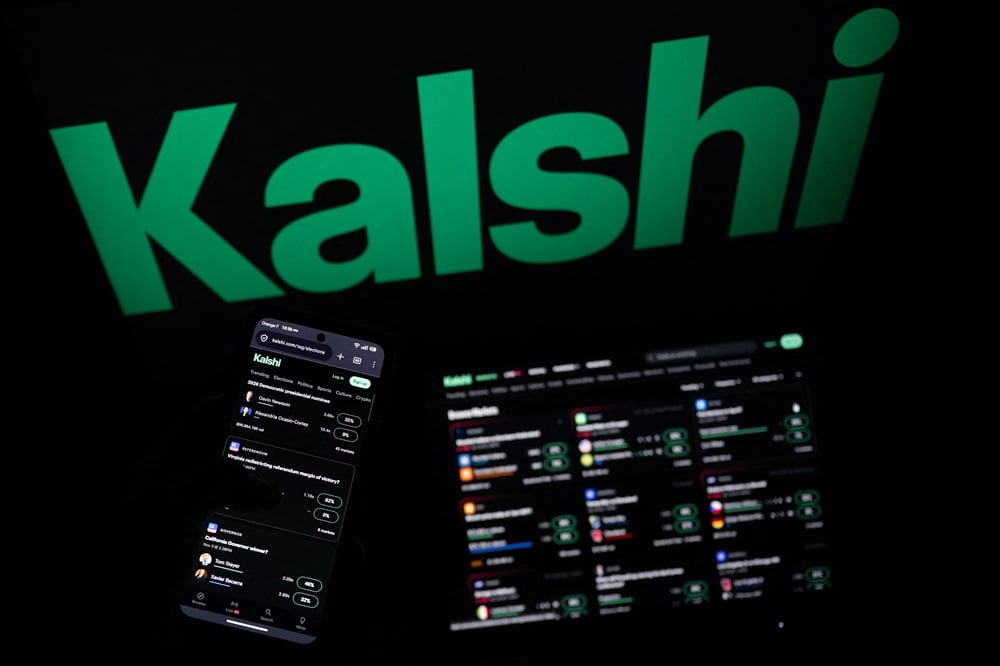
Kalshi, the New York-based CFTC-regulated event contract exchange, posted a 90% increase in ADV during June 2025, outpacing the broader industry’s 80% growth rate. Open interest at Kalshi jumped 94% over the same period, according to the Jefferies report [1]. These figures confirm that Kalshi is not merely growing in line with the market; Kalshi is actively taking share from competitors and attracting new capital that was not previously deployed in prediction markets.
Kalshi’s legal status as a designated contract market (DCM) under CFTC regulation is the foundational competitive advantage that separates Kalshi from offshore or crypto-native alternatives. Kalshi won a landmark federal court ruling in August 2024 that affirmed Kalshi’s right to offer political event contracts, a decision that opened the door to a much broader range of contract types and attracted institutional market makers who require regulatory clarity before committing capital. That regulatory moat is now translating directly into volume leadership.
Kalshi and Polymarket together accounted for nearly $1.6 billion of the $1.7 billion industry ADV in June 2025, meaning the two platforms collectively held approximately 94% of total market share [1]. This level of concentration is typical of early-stage financial markets where network effects and liquidity advantages compound rapidly, but it also signals that new entrants face a steep climb to achieve meaningful scale.
Polymarket’s Role as the Crypto-Native Counterpart
Polymarket, the Polygon blockchain-based prediction market that settles contracts in USDC, contributed the bulk of the remaining volume within the Kalshi-Polymarket duopoly. Polymarket operates without a U.S. CFTC license and restricts American users, positioning Polymarket as the dominant platform for international and crypto-native participants. Polymarket gained global recognition during the 2024 U.S. presidential election cycle, when Polymarket’s contract prices on Donald Trump’s victory probability were cited by major financial media as a real-time sentiment indicator.
The fact that Polymarket and Kalshi together represent 94% of industry ADV despite their fundamentally different regulatory and technical architectures illustrates a key dynamic: prediction market participants are bifurcating into regulated U.S. retail and institutional users (Kalshi) and global crypto-native users (Polymarket). Both pools are growing, and both are being served by platforms with strong network effects and deep liquidity. Read our full comparison of Kalshi vs. Polymarket for crypto investors.
New Entrants and the Competitive Landscape in Mid-2025
Platform Comparison: June 2025 Snapshot
| Platform | June ADV Change | Regulatory Status | Key Backer / Structure | Settlement |
|---|---|---|---|---|
| Kalshi | +90% ADV, +94% OI | CFTC-regulated DCM | Sequoia, Henry Kravis | USD (cash) |
| Polymarket | Part of $1.6B combined | Unregulated (non-U.S.) | Peter Thiel, Founders Fund | USDC on Polygon |
| Rothera | Launched June 2025 | Pending / early stage | Robinhood, Susquehanna | TBD |
| Cboe Predicts | Expanded June 2025 | Cboe Global Markets (regulated) | Cboe Global Markets | USD (cash) |
| DraftKings DKeX | Launched June 2025 | Sports betting licensed | DraftKings Inc. | USD (cash) |
Rothera: The Robinhood and Susquehanna-Backed Challenger
Rothera launched in June 2025 with financial backing from Robinhood Markets and Susquehanna International Group, two names that carry significant weight in retail brokerage and quantitative trading respectively. Robinhood’s involvement is particularly notable: Robinhood’s existing user base of tens of millions of retail investors represents a ready-made distribution channel for prediction market products, and Robinhood’s brand recognition could accelerate retail adoption far faster than organic growth alone. Susquehanna’s backing signals that sophisticated market-making infrastructure is being built into Rothera from day one, which matters for liquidity depth [1].
The Robinhood connection also raises a strategic question about whether Rothera will eventually integrate directly into the Robinhood app, potentially bringing prediction market contracts to the same interface where millions of Americans already trade stocks and options. If that integration occurs, Rothera could scale rapidly enough to challenge Kalshi’s volume leadership within 12 to 18 months.
Cboe Predicts and DraftKings DKeX: Institutional and Sports-Native Entrants
Cboe Global Markets, the Chicago-based exchange operator that runs the Cboe Options Exchange and several equity and volatility index products, expanded its Cboe Predicts offering in June 2025. Cboe’s entry is significant because Cboe brings exchange infrastructure, regulatory relationships, and institutional client relationships that no startup can replicate quickly. Cboe Predicts positions prediction market contracts alongside Cboe’s existing derivatives suite, potentially introducing event contracts to professional traders who already use Cboe platforms for VIX options and S&P 500 index products [1].
DraftKings, the publicly traded daily fantasy sports and sports betting operator, launched DKeX in June 2025. DraftKings’ entry is a direct play on the 89% sports contract dominance identified in the Jefferies report. DraftKings already has deep relationships with sports leagues, media rights holders, and a user base that skews heavily toward sports engagement. DKeX allows DraftKings to offer a regulated financial product that sits adjacent to DraftKings’ existing sports betting business, potentially capturing users who want a more financially sophisticated way to express sports outcome views. See how sports betting platforms are converging with financial derivatives markets.
The simultaneous launch of three well-capitalized competitors in a single month is not coincidental. June 2025’s 80% volume surge likely validated business cases that had been under development for 12 to 24 months, and the timing of these launches suggests that multiple organizations reached the same conclusion about market readiness at roughly the same time.
Why Sports Event Contracts Drive 89% of Prediction Market Volume
Seasonality, Liquidity, and the Sports Calendar
The 89% share held by sports event contracts in June 2025 is not surprising when viewed through the lens of the sports calendar. June sits at the intersection of the NBA Finals, the Stanley Cup Finals, the UEFA Champions League conclusion, the start of the MLB regular season’s midpoint, and major international soccer tournaments. Each of these events generates thousands of individual outcome contracts, from game winners to player performance milestones, creating a dense web of tradeable instruments that retail participants understand intuitively [1].
Sports contracts also benefit from a structural liquidity advantage over political or economic event contracts. Sports outcomes resolve quickly, typically within hours or days, which means capital cycles through the market rapidly. A contract on the NBA Finals Game 7 winner resolves the same night, freeing capital for the next event. Political contracts, by contrast, can remain open for months or years, tying up capital and reducing turnover velocity. High turnover velocity is the primary reason sports contracts generate disproportionate ADV relative to their share of total open interest.
The 89% figure also reflects the current state of retail participation. Prediction market users in 2025 are still predominantly sports-engaged consumers who discovered these platforms through sports betting adjacency. As the user base matures and financial literacy around event contracts grows, the share of political, economic, and financial event contracts is likely to increase. The 2026 U.S. midterm elections and ongoing Federal Reserve rate decision contracts are already attracting growing interest on both Kalshi and Polymarket.
The Financial Derivatives Parallel
From a financial derivatives perspective, sports event contracts function similarly to binary options: they pay a fixed amount on a defined outcome and zero otherwise. The key difference is that regulated prediction market contracts in the United States operate under CFTC oversight as event contracts rather than as securities or traditional options, which affects how they are taxed, margined, and reported. This regulatory classification is what allows Kalshi to offer these products to U.S. retail investors without triggering securities law requirements [1].
The growth of sports event contracts as a financial instrument also creates new data products. Real-time contract prices on sports outcomes are increasingly used by media organizations, sports analytics firms, and even team front offices as probability signals. This secondary use case adds informational value to the market beyond pure speculation, which strengthens the argument for prediction markets as a legitimate financial infrastructure layer rather than a gambling substitute. Learn how blockchain-based oracle networks are being used to settle prediction market contracts.
What the Prediction Market Boom Means for Crypto and Blockchain Finance
Polymarket’s architecture sits entirely on the Polygon blockchain, with contracts denominated and settled in USDC, the Circle-issued dollar-pegged stablecoin. Every trade on Polymarket is an on-chain transaction, meaning the $1.7 billion ADV figure includes a meaningful volume of blockchain-settled activity. For crypto and blockchain finance readers, this is a direct data point: prediction markets are one of the clearest real-world use cases for stablecoin settlement and smart contract-based financial instruments operating at scale.
The growth of regulated, centralized prediction markets like Kalshi also creates a competitive dynamic with decentralized alternatives. As Kalshi and Cboe Predicts attract institutional capital through regulatory compliance, decentralized prediction market protocols such as Augur and Gnosis (now Omen) face pressure to either achieve comparable regulatory clarity or differentiate on permissionlessness and global access. Polymarket has navigated this tension by remaining offshore and crypto-native, but the long-term regulatory trajectory in the United States will determine whether that positioning remains viable.
For blockchain infrastructure investors and developers, the prediction market boom signals growing demand for fast, low-cost settlement layers capable of handling high-frequency binary contract resolution. Polygon’s role as Polymarket’s settlement layer has generated measurable transaction volume, and the broader trend toward on-chain event contract settlement could benefit Layer 2 networks, oracle providers like Chainlink (which supplies real-world data for contract resolution), and stablecoin issuers whose tokens serve as the unit of account. Read our analysis of how Chainlink oracles power decentralized prediction market settlement.
Key Takeaways
- Prediction market average daily volume reached $1.7 billion in June 2025, an 80% increase over May 2025, according to Jefferies research [1].
- Sports event contracts accounted for 89% of total June 2025 prediction market volume, driven by the NBA Finals, Stanley Cup, and international soccer calendar [1].
- Kalshi posted a 90% ADV increase and a 94% jump in open interest in June 2025, outpacing the broader industry growth rate [1].
- Kalshi and Polymarket together captured nearly $1.6 billion of the $1.7 billion industry ADV in June 2025, representing approximately 94% combined market share [1].
- Three new competitors entered or expanded in June 2025: Rothera (backed by Robinhood and Susquehanna), Cboe Predicts (from Cboe Global Markets), and DraftKings DKeX [1].
- Polymarket settles all contracts in USDC on the Polygon blockchain, making prediction market volume a direct contributor to on-chain stablecoin transaction activity.
- The CFTC’s 2024 legal recognition of Kalshi’s political event contracts established the regulatory framework that enabled the sector’s 2025 institutional expansion.
Frequently Asked Questions
What is a prediction market and how does it work?
A prediction market is a financial exchange where participants buy and sell contracts tied to the outcome of real-world events, such as sports results, elections, or economic data releases. Contract prices reflect the market’s collective probability estimate for each outcome. In the United States, regulated prediction markets like Kalshi operate as CFTC-designated contract markets, meaning contracts are classified as event contracts rather than securities or traditional options [1].
Why did prediction market volume surge 80% in June 2025?
The 80% month-over-month surge in June 2025 was driven primarily by sports event contracts, which accounted for 89% of total volume. June’s sports calendar, including the NBA Finals, Stanley Cup Finals, and major international soccer events, generated high contract turnover. The simultaneous launch of new platforms including Rothera, Cboe Predicts, and DraftKings DKeX also added liquidity and new participants to the market [1].
Is Kalshi regulated by the CFTC?
Yes. Kalshi operates as a CFTC-designated contract market (DCM), which means Kalshi is subject to federal oversight and can legally offer event contracts to U.S. retail and institutional investors. Kalshi won a landmark federal court ruling in August 2024 affirming Kalshi’s right to offer political event contracts, which significantly expanded the range of products Kalshi can list and attracted institutional market makers to the platform.
How does Polymarket differ from Kalshi?
Polymarket operates on the Polygon blockchain and settles contracts in USDC, the Circle-issued dollar-pegged stablecoin. Polymarket does not hold a U.S. CFTC license and restricts American users, positioning Polymarket as the dominant platform for international and crypto-native participants. Kalshi is a centralized, CFTC-regulated exchange that settles in U.S. dollars and serves U.S. retail and institutional users. Together, the two platforms held approximately 94% of industry ADV in June 2025 [1].
Who are the new prediction market competitors that launched in June 2025?
Three notable entrants launched or expanded in June 2025. Rothera is backed by Robinhood Markets and Susquehanna International Group, bringing retail distribution and quantitative market-making infrastructure. Cboe Predicts is an expansion by Cboe Global Markets, the Chicago-based exchange operator, targeting institutional derivatives traders. DraftKings DKeX is a prediction market product from DraftKings Inc., the publicly traded sports betting operator, focused on sports event contracts [1].
The Bottom Line
June 2025 marks a structural inflection point for prediction markets as a financial asset class. The $1.7 billion ADV figure, the 80% month-over-month growth rate, and the simultaneous entry of Robinhood-backed Rothera, Cboe Global Markets, and DraftKings into the space within a single month collectively signal that prediction markets have crossed from niche experiment to mainstream financial product. Kalshi’s 90% ADV surge and 94% open interest jump confirm that the platform’s regulatory first-mover advantage is compounding into durable market leadership [1].
The 89% sports contract share will likely moderate over time as political, economic, and financial event contracts attract more sophisticated participants, but sports will remain the volume engine that funds platform growth and builds the liquidity pools that institutional traders require. The entry of Cboe Global Markets is the single most important signal for long-term institutional adoption: when a 130-year-old exchange operator with deep regulatory relationships and a professional client base decides to build a prediction market product, the asset class has arrived.
For crypto and blockchain finance participants, the Polymarket data embedded within these figures is a proof point that on-chain stablecoin settlement can handle real financial volume at scale. The prediction market boom is not just a story about sports betting’s evolution; it is a live demonstration that blockchain-based financial infrastructure works when the product-market fit is right.
Sources
- Casino.org – Jefferies report coverage: prediction market ADV surges 80% in June 2025, sports contracts at 89%, Kalshi ADV up 90%, open interest up 94%, new entrants Rothera, Cboe Predicts, and DraftKings DKeX launch or expand.
