
Swift-Kelce Wedding Shakes Prediction Markets: Winners, Losers, and $6M in Bets Settled

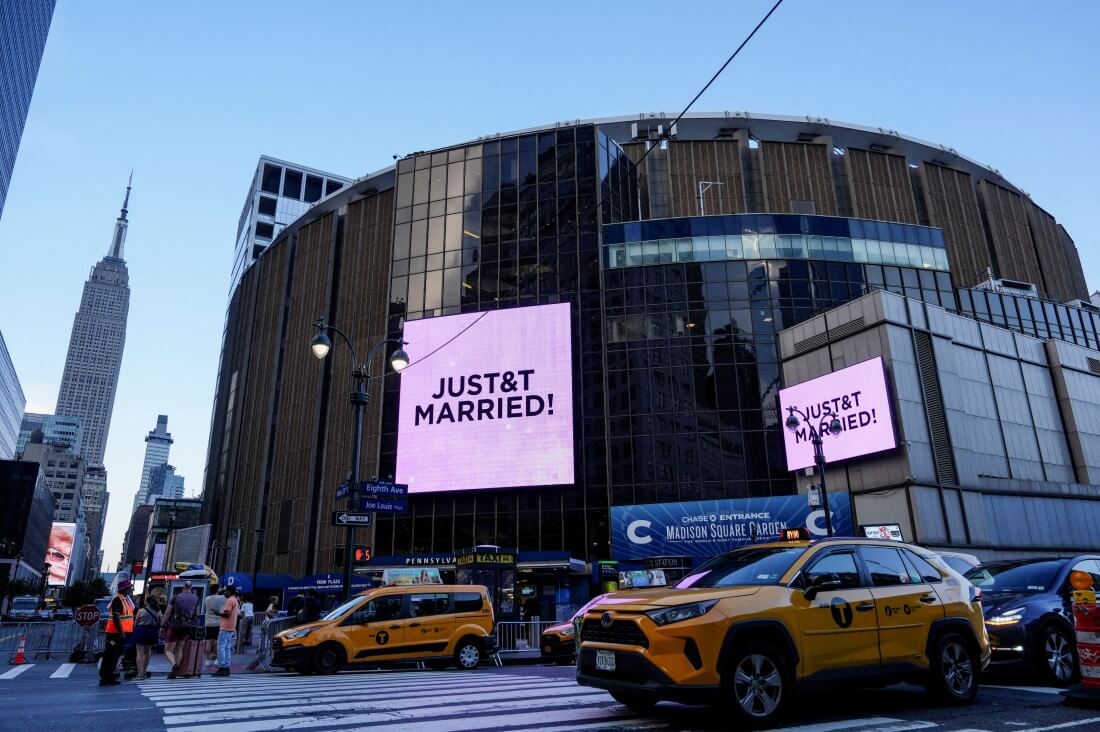
Taylor Swift and Travis Kelce officially married on July 3, 2026, closing out one of the most actively traded celebrity prediction market cycles in recorded history, with an estimated $6 million in contracts settled across platforms including Kalshi. The wedding validated a 66% market consensus on a 2026 date, while delivering a venue surprise at Madison Square Garden that wrong-footed traders who had priced Rhode Island as the frontrunner. The event is now a benchmark case study in how prediction markets handle high-profile, information-rich celebrity events.
Prediction Markets Called the Year Right, But Missed the Venue Entirely
The 66% Consensus That Proved Correct
By May 2026, prediction market traders on platforms including Kalshi had pushed the probability of a Taylor Swift and Travis Kelce wedding occurring in 2026 to 66%. That figure represented a meaningful shift from earlier in the year, when a 2025 wedding had drawn significant speculative interest before fading as the couple made no public announcements. The 66% reading reflected aggregated trader conviction, not a single analyst’s forecast, which is precisely what makes the outcome significant for anyone studying crowd-sourced probability as a financial tool.
The market resolved correctly. The July 3, 2026 ceremony confirmed that traders who held “Yes” positions on a 2026 wedding collected their payouts. At a 66% implied probability, the contract would have been priced at roughly $0.66 per $1.00 of potential payout, meaning early buyers who entered at lower odds captured the largest returns. This is the core mechanic that makes celebrity prediction markets function similarly to event-driven derivatives in traditional finance.
The 2026 wedding market is one of the clearest examples of prediction markets converging on a correct outcome well in advance of the event, with the 66% figure holding relatively stable in the weeks before the ceremony rather than spiking only after leaked information emerged. That stability suggests genuine informational efficiency, not last-minute insider-driven price movement. According to reporting by Covers.com, the market dynamics around this wedding reflected a maturing prediction market ecosystem rather than the speculative noise that characterized earlier celebrity event contracts [1].
Madison Square Garden: The Venue That Broke the Model
If the year market was a win for crowd wisdom, the venue market was a humbling lesson in its limits. Earlier speculation had centered heavily on Rhode Island as the wedding location, a rumor that gained enough traction to move prediction market odds. Madison Square Garden in New York City, one of the most recognizable arenas in the world, was not a frontrunner in any publicly reported market pricing.
The choice of Madison Square Garden as a wedding venue is genuinely unconventional. The arena seats approximately 20,000 people for concerts and hosts the New York Knicks and New York Rangers. Choosing it for a private ceremony required the kind of logistical coordination and security infrastructure that only a handful of celebrities in the world could arrange. Traders who had positioned on Rhode Island-adjacent venue markets absorbed losses when the New York City location was confirmed.
This outcome illustrates a structural limitation of celebrity prediction markets: venue and logistical details are far harder to price accurately than binary timing questions. A “Will they marry in 2026?” question has a finite resolution path. A “Where will the wedding be held?” question involves dozens of plausible outcomes, each with thin liquidity and high sensitivity to unverifiable rumors. The Madison Square Garden result will likely prompt platform operators at Kalshi and competitors to reconsider how they structure venue-specific markets for future high-profile events.
The Full Scorecard: Which Bets Paid Off and Which Did Not
Bridesmaids, Groomsmen, and the Austin Swift Surprise
Beyond the headline wedding date and venue, prediction markets generated substantial trading volume on granular ceremony details. The bridesmaid question was one of the most actively discussed, given Taylor Swift’s well-documented close friendships with figures including Selena Gomez, Sabrina Carpenter, and Phoebe Bridgers. Traders who bet “Yes” on bridesmaids being present lost their positions entirely. Taylor Swift chose her brother, Austin Swift, as Man of Honor and had no bridesmaids at all, a decision that resolved the market definitively against the majority expectation.
The Austin Swift Man of Honor outcome was a zero-probability event in most public market discussions, which means traders who somehow identified this possibility and held “Yes” positions on Austin Swift’s involvement in the ceremony captured outsized returns. This is the kind of asymmetric information advantage that prediction market theorists argue makes these platforms valuable: they reward genuine research and penalize assumption-based betting. The outcome also reflects Taylor Swift’s consistent pattern of subverting public expectations, a behavioral signal that sophisticated traders arguably should have weighted more heavily.
On the groomsman side, Jason Kelce, Travis Kelce’s older brother and retired Philadelphia Eagles center, was the clear frontrunner in prediction markets and ultimately confirmed as a groomsman. Traders who held “Yes” on Jason Kelce’s participation were rewarded. This resolution was arguably the most predictable outcome of the entire event, given the brothers’ publicly documented close relationship and Jason Kelce’s prominent presence throughout Travis Kelce’s relationship with Taylor Swift.
Guest List Markets: Selena Gomez Yes, Harry Styles No
The guest list generated its own set of prediction market contracts, with traders pricing the attendance probability of dozens of high-profile names. Selena Gomez, one of Taylor Swift’s closest and most publicly visible friends, resolved as a “Yes,” rewarding traders who had priced her attendance as near-certain. Sabrina Carpenter, who has toured with Taylor Swift and maintained a visible friendship with her, also attended, resolving her market as a “Yes.”
Harry Styles, Taylor Swift’s former partner and one of the most searched names in any Taylor Swift-adjacent prediction market, did not attend. Phoebe Bridgers, the indie artist and frequent collaborator in Taylor Swift’s extended social circle, was also a no-show. Both outcomes resolved as “No,” meaning traders who had bet on their attendance lost their positions. The Harry Styles market in particular likely carried significant volume given the tabloid interest in any potential interaction between the two artists at such a high-profile event [1].
| Prediction Market Question | Pre-Event Odds / Expectation | Outcome | Result for “Yes” Traders |
|---|---|---|---|
| Wedding in 2026 | 66% probability (May 2026) | Married July 3, 2026 | Win |
| Venue: Rhode Island | Frontrunner in early rumors | Madison Square Garden, NYC | Loss |
| Bridesmaids present | High expectation | No bridesmaids; Austin Swift as Man of Honor | Loss |
| Jason Kelce as groomsman | Clear frontrunner | Confirmed groomsman | Win |
| Selena Gomez attends | Near-certain expectation | Attended | Win |
| Sabrina Carpenter attends | Likely | Attended | Win |
| Harry Styles attends | Speculative, high volume | Did not attend | Loss |
| Phoebe Bridgers attends | Moderate expectation | Did not attend | Loss |
$6 Million in Contracts and the Maturation of Celebrity Prediction Markets in 2026
The Swift-Kelce wedding generated an estimated $6 million in total traded contracts across prediction market platforms, making it one of the highest-volume celebrity event markets of 2026. For context, Kalshi, the CFTC-regulated prediction market platform that has led the charge on legalizing event contracts in the United States, has seen its total trading volume grow substantially since receiving regulatory clarity in 2023 and 2024. Celebrity markets, while not the platform’s primary focus, have become a meaningful driver of user acquisition and media attention.
Polymarket, the decentralized prediction market platform built on the Polygon blockchain, has also hosted celebrity event markets, though its regulatory status in the United States remains more complex than Kalshi’s. The Swift-Kelce wedding markets represent a convergence point: regulated platforms like Kalshi and decentralized alternatives like Polymarket both competed for trader attention on the same real-world event, with slightly different contract structures and liquidity profiles. This parallel market dynamic is increasingly common for major events and reflects the broader fragmentation of the prediction market sector in 2026.
The $6 million figure, while significant for a celebrity event, remains modest compared to the hundreds of millions traded on political prediction markets during the 2024 U.S. presidential election cycle. That election cycle, which saw Polymarket alone process over $3.5 billion in total volume according to publicly reported figures, established prediction markets as a legitimate financial instrument in the eyes of many institutional observers. Celebrity markets like the Swift-Kelce wedding are the retail-facing entry point that brings new users into the ecosystem before they graduate to higher-stakes political and economic event contracts [1].
It is also worth noting that public perception of prediction markets remains divided. A 2025 poll found that 61% of Americans classify prediction markets as gambling, a framing that platforms like Kalshi actively contest by emphasizing their CFTC oversight and the informational value of market prices. The Swift-Kelce wedding markets, with their mix of correct and incorrect resolutions, provide ammunition for both sides of that debate: the 2026 wedding date prediction demonstrates genuine crowd wisdom, while the Rhode Island venue miss demonstrates the speculative noise that critics associate with gambling.
[PLACEHOLDER: IMAGE_2]
What the Swift-Kelce Markets Reveal for Crypto and Blockchain Finance Readers
For readers focused on crypto and blockchain finance, the Swift-Kelce prediction market cycle offers a concrete case study in on-chain versus off-chain event contract mechanics. Polymarket’s Polygon-based infrastructure processed Swift-Kelce contracts using USDC as collateral, meaning every position was settled in a stablecoin with full on-chain transparency. Traders could verify open interest, liquidity pool depth, and resolution criteria directly on-chain without relying on a centralized platform’s reported figures. This transparency is a structural advantage that decentralized prediction markets hold over their regulated, centralized counterparts.
The venue market failure, specifically the Rhode Island miss, also illustrates a risk management lesson relevant to any event-driven trading strategy. Prediction markets on celebrity events are highly susceptible to rumor-driven price distortion, where a single tabloid report can move odds significantly without any verified information backing the move. Traders who applied position sizing discipline and avoided overweighting the Rhode Island venue contracts limited their downside. Those who concentrated positions based on unverified rumors absorbed the full loss when Madison Square Garden was confirmed.
The broader prediction market sector’s growth also intersects with the tokenization trend that is reshaping traditional finance in 2026. As real-world asset tokenization expands, the infrastructure for settling event-based contracts on-chain becomes more valuable. Platforms that can handle high-volume celebrity event markets today are building the liquidity and smart contract infrastructure that will eventually support tokenized insurance contracts, parametric financial products, and other event-driven instruments. The Swift-Kelce wedding, trivial as the subject matter may seem, stress-tested that infrastructure at scale.
Key Takeaways
- Taylor Swift and Travis Kelce married on July 3, 2026, at Madison Square Garden in New York City, resolving all active prediction market contracts on the event.
- Prediction markets on platforms including Kalshi assigned a 66% probability to a 2026 wedding as of May 2026, a figure that proved correct.
- The Madison Square Garden venue was not a frontrunner in any publicly reported market pricing; Rhode Island had been the dominant rumor, costing venue-market traders their positions.
- Austin Swift served as Man of Honor with no bridesmaids present, resolving the bridesmaid market as a “No” and surprising the majority of traders who expected a traditional bridal party.
- Jason Kelce was confirmed as a groomsman, rewarding traders who held “Yes” positions on his participation; Selena Gomez and Sabrina Carpenter also attended, resolving their guest markets as wins.
- Harry Styles and Phoebe Bridgers did not attend, resolving their respective guest markets as “No” and costing traders who had bet on their presence.
- An estimated $6 million in total contracts were traded across prediction market platforms on Swift-Kelce wedding-related questions, making it one of the highest-volume celebrity event markets of 2026.
Frequently Asked Questions
When did Taylor Swift and Travis Kelce get married?
Taylor Swift and Travis Kelce married on July 3, 2026. The ceremony took place at Madison Square Garden in New York City, an unconventional venue choice that defied earlier speculation pointing to Rhode Island as the likely location [1].
What did prediction markets say about the Swift-Kelce wedding?
By May 2026, prediction markets including those on Kalshi had priced a 2026 Taylor Swift and Travis Kelce wedding at 66% probability. That consensus proved correct when the couple married on July 3, 2026. Markets also covered venue, guest list, and ceremony details, with mixed accuracy across those sub-markets [1].
Who won and who lost on Swift-Kelce prediction market bets?
Traders who bet “Yes” on a 2026 wedding, Jason Kelce as groomsman, Selena Gomez attending, and Sabrina Carpenter attending all collected payouts. Traders who bet “Yes” on bridesmaids being present, Rhode Island as the venue, Harry Styles attending, and Phoebe Bridgers attending all lost their positions.
How much money was traded on Taylor Swift wedding prediction markets?
An estimated $6 million in total contracts were traded across prediction market platforms on Swift-Kelce wedding-related questions. This makes the event one of the highest-volume celebrity prediction market cycles of 2026, though it remains modest compared to the billions traded on political event markets during the 2024 U.S. presidential election cycle.
Is betting on celebrity weddings legal in the United States?
Event contracts on platforms like Kalshi are legal in the United States under Commodity Futures Trading Commission oversight, following regulatory clarity established in 2023 and 2024. Decentralized platforms like Polymarket operate in a more complex regulatory environment. A 2025 poll found that 61% of Americans consider prediction markets to be gambling, a classification that regulated platforms actively contest [1].
The Bottom Line
The Taylor Swift and Travis Kelce wedding on July 3, 2026 was more than a cultural moment. It was a live stress test of prediction market accuracy across a dozen simultaneous contracts, and the results were instructive. Markets got the big call right: 66% odds on a 2026 wedding proved to be well-calibrated. But the venue miss and the bridesmaid surprise demonstrated that prediction markets remain vulnerable to rumor-driven mispricing on granular details, particularly when verified information is scarce and tabloid speculation fills the void.
For the prediction market industry, the $6 million in settled contracts represents continued growth in celebrity event liquidity, a segment that serves as the retail on-ramp for a sector that processed billions in political and economic event contracts in 2024. Platforms like Kalshi and Polymarket will study the Swift-Kelce cycle closely, both for the market design lessons it offers and for the user acquisition data it generates. Every new trader who entered a prediction market for the first time to bet on Austin Swift’s role in the ceremony is a potential long-term participant in more consequential markets.
The wedding is over. The contracts are settled. And prediction markets, for better or worse, have now demonstrated they can mobilize millions of dollars around a single celebrity event with enough granularity to cover the groomsmen list. That is either a sign of a maturing financial instrument or a reminder that markets will price anything with sufficient public interest. Probably both.
Sources
- Covers.com – Reporting on prediction market activity, odds, and resolutions for the Taylor Swift and Travis Kelce wedding, including the 66% probability figure for a 2026 wedding, venue market outcomes, guest list resolutions, and estimated trading volume.
