
Binance Controls Nearly 87% of Trump-Linked USD1 Stablecoin Supply

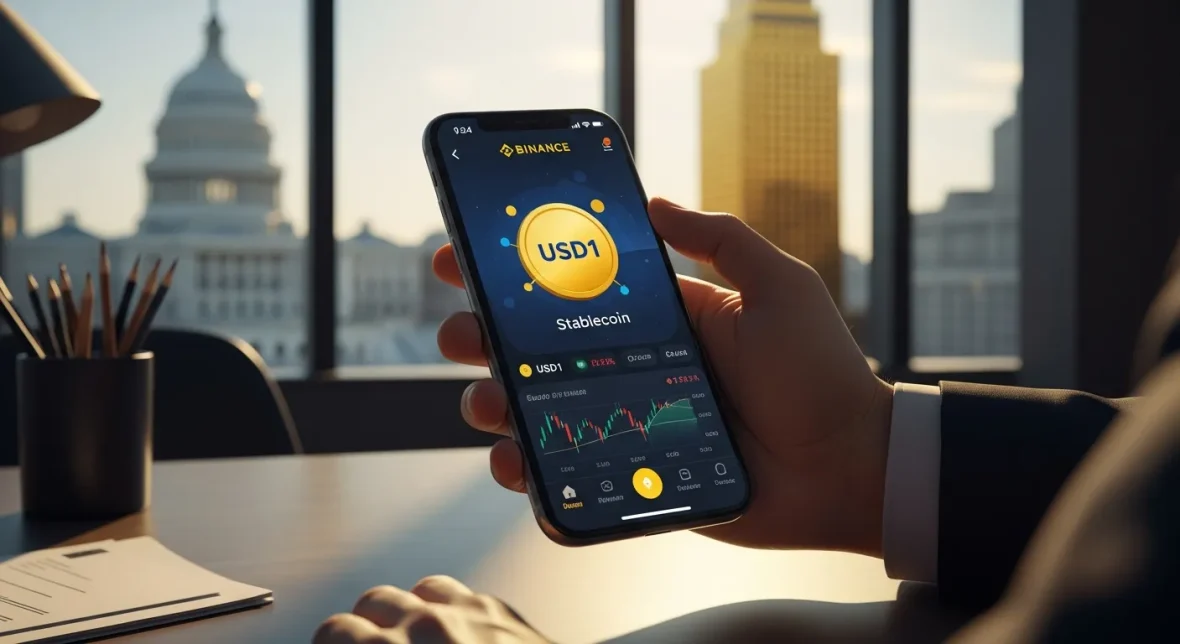
If you follow stablecoins in today’s fast-moving crypto market, the USD1 stablecoin has probably crossed your radar — partly because of its ties to former President Donald Trump, and partly because of a striking fact about who holds it. Binance, the global crypto exchange, holds nearly 87% of the USD1 supply. That level of concentration is more than a curiosity: it shapes the token’s liquidity, its exposure to a single company’s decisions, and the risks you take on if you hold or transact with it. This guide walks through where USD1 fits in the stablecoin landscape, why its political association matters, what Binance’s outsized role means in practice, and how to weigh the token if you are an investor or business professional navigating this space.
Key Takeaways
- Binance controls nearly 87% of the USD1 stablecoin supply, giving it significant influence over the token’s liquidity and market dynamics.
- USD1 is tied to former President Trump, which shapes investor perception and introduces political considerations alongside financial ones.
- Because so much of the supply sits with one exchange, regulatory actions or policy changes affecting Binance could ripple directly into USD1’s stability and accessibility.
- Prudent investors diversify their stablecoin holdings and follow regulatory developments and Binance’s corporate decisions closely.
- USD1 aims to offer dollar-backed stability for transactions, but its political connections and Binance’s control make the broader context essential to understand before committing funds.
Understanding the USD1 Stablecoin
USD1 is a relatively new entrant in the stablecoin market: a digital asset pegged to the US dollar and designed to hold a steady price. The basic promise of any stablecoin is simple. Traditional cryptocurrencies can swing dramatically in value, which makes them awkward tools for everyday payments, invoicing, or holding working capital. A dollar-pegged token is meant to sidestep that volatility so it can be used for routine transactions and cross-border payments without the holder worrying about what the token will be worth tomorrow.
That is the role USD1 aims to fill. It positions itself as a dollar-backed token that supports daily transactions and international transfers, competing in a space where established names like USDT and USDC already dominate. Compared with those incumbents, USD1 arrived later and with far less track record — but with something the others do not have: a political identity.
How USD1 differs from established stablecoins
USDT and USDC built their positions over years of trading activity, exchange listings, and integration into crypto market infrastructure. A newer stablecoin has to earn that trust from scratch, and the market tends to judge newcomers on distribution, transparency, and who stands behind them. USD1’s story is unusual on all three counts. Its distribution is extraordinarily concentrated on a single exchange, and the network of business and political supporters behind it extends its identity beyond finance into political signaling. For anyone evaluating the token’s reliability and legitimacy, those differences matter as much as the peg itself.
The Trump Connection and Why It Matters
USD1 comes attached to a political headline: its affiliation with former President Donald Trump. Whether or not you care about the politics, that association changes how the token is perceived and how institutions and individuals interact with it.
The link is not merely a marketing flourish. It reflects a network of business and political supporters who back the stablecoin, which gives USD1 an identity that blends finance with political alignment. That cuts both ways. Some holders may be drawn to the token precisely because of its association; others — particularly institutions with compliance departments and reputational concerns — may treat the same association as a reason for caution.
For investors, the practical question is whether the coin’s value and adoption are driven more by political loyalty than by fundamental economic factors. A stablecoin’s usefulness ultimately rests on people trusting the peg and being able to move in and out of the token freely. If demand is tied to political sentiment, then shifts in the political environment can translate into shifts in demand, adoption, and scrutiny in a way that purely financial stablecoins rarely experience. That is an unusual risk profile for an asset whose entire purpose is to be boring and stable.
Binance’s Dominant Share of the USD1 Supply
The most consequential fact about USD1 today is distributional: Binance holds nearly 87% of the token’s supply. Given the exchange’s global reach and influence, its involvement with a newer stablecoin is not surprising in itself. What stands out is the sheer proportion. When one platform holds the overwhelming majority of a token’s supply, that platform effectively controls the token’s liquidity and flow.
In practical terms, this means Binance has enormous power over USD1’s price stability and trading volumes. If Binance adjusts its policies, limits withdrawals, or changes how USD1 is listed, the ripple effects could be profound for everyone holding the token — whether they hold it on Binance or elsewhere. The exchange’s dominance simplifies market access, because most of the liquidity lives in one place, but it also centralizes risk in a way that is rare for assets built on decentralized rails.
Why concentration changes the risk picture
Liquidity is the lifeblood of a stablecoin. Holders need confidence that they can convert the token at or near its peg whenever they choose. When liquidity is spread across many venues and holders, no single participant’s decisions can easily disrupt that confidence. When nearly the entire supply sits with one exchange, the situation inverts: the token’s day-to-day usability depends on that exchange’s operational health, listing decisions, and regulatory standing. The market for USD1 is, in effect, only as open as Binance chooses — or is permitted — to keep it.
Risks for Investors and Market Stability
This concentration introduces clear risks that deserve to be spelled out plainly.
First, there is platform risk. If Binance faces regulatory pressure, technical issues, or strategic shifts, the value and utility of USD1 could suffer abruptly. You might find yourself holding tokens on an exchange that suddenly restricts movement or faces liquidity problems, with few alternative venues deep enough to absorb selling pressure.
Second, there is policy risk. Exchanges routinely change listing terms, trading pairs, fee structures, and withdrawal rules. For most assets, such changes are an inconvenience. For a token whose supply is overwhelmingly held by one exchange, they can be existential. A decision made for Binance’s own commercial or compliance reasons could reshape USD1’s market overnight.
Third, there is the compounding effect of the political dimension. USD1 already carries geopolitical controversy because of its Trump affiliation. Layering near-total supply concentration on top of that means two distinct sources of risk — political and structural — can interact. Regulatory attention drawn by one can amplify the consequences of the other. For risk-averse investors, that combination raises red flags that neither factor would raise on its own to the same degree.
The broader point is that USD1’s stability does not hinge only on general crypto market trends. It hinges, to an unusual extent, on the decisions of one platform. That is a fundamentally different risk profile from a widely distributed stablecoin, and it should be priced into any decision to hold the token.
Market Reactions and Community Perspectives
The market’s response to Binance’s hold on USD1 has been mixed, and the disagreement itself is informative.
Some investors read the concentration as a vote of confidence: Binance would not consolidate so much supply if it did not believe in the stablecoin’s potential, and the exchange’s infrastructure gives USD1 immediate access to deep markets. On this view, a powerful backer is an asset, not a liability.
Others see the same fact and reach the opposite conclusion. Cryptocurrency’s original appeal, for many participants, was decentralization — the idea that no single entity should control an asset’s fate. A stablecoin whose supply sits almost entirely with one exchange undermines that ethos, whatever the intentions behind it.
In online forums and crypto communities, the conversation often comes down to trust. Binance enjoys a solid reputation for security and innovation, but critics warn that no single entity should wield such concentrated control over any asset, however well-run. Traders, meanwhile, are watching price movements closely, wary that decisions by Binance could spark sudden volatility or trading freezes.
For you, the takeaway from these community debates is not that one side is right. It is that reasonable, informed participants disagree sharply about USD1’s structure — and when that is true of an asset marketed as stable, vigilance and due diligence before diving in are not optional extras. They are the minimum.
The Future Outlook for USD1 and Binance’s Influence
Looking ahead, USD1’s trajectory appears tightly linked to Binance’s strategy and to wider market trends. If Binance continues to back and promote the token, that support could drive adoption and usage, especially in markets looking for alternatives to USDT or USDC. Distribution through the world’s dominant exchange is a growth channel most new stablecoins can only dream of.
But that same dependency means USD1’s fate rests less with a community or a decentralized protocol and more with one company’s corporate agenda. This is a double-edged sword. On one side, Binance’s infrastructure and liquidity offer USD1 a genuine pathway to growth. On the other, overreliance on a single player can stifle competition among trading venues and leave holders exposed to policy shifts they cannot influence and may not see coming.
Several open questions will shape how this plays out. Will the supply become more distributed over time as adoption spreads beyond one exchange, or will concentration persist? Will the political association broaden the token’s appeal or narrow it? And how will regulators respond to a dollar-pegged token that combines political affiliation with concentrated exchange control? None of these questions has a settled answer yet, which is precisely why treating USD1 as interchangeable with established stablecoins would be a mistake.
For your portfolio, the pragmatic conclusion is balance: exposure to USD1, if you want it at all, sits more safely alongside other stablecoins and assets than as a concentrated position resting on a single vessel.
Regulatory and Compliance Considerations
USD1’s political ties and Binance’s central role mean regulators are bound to keep a close watch. Authorities in the US and other jurisdictions routinely scrutinize stablecoins for anti-money laundering compliance, political financing risks, and financial transparency. Each of those lenses is directly relevant here.
The Trump affiliation could intensify scrutiny around political financing and complicate how regulatory bodies view the token. The supply concentration invites questions about market structure and investor protection. And Binance itself, as the dominant holder, becomes the natural focal point for any enforcement or compliance action touching USD1 — meaning the token inherits the exchange’s regulatory exposure on top of its own.
From your perspective, the practical implications are concrete. Changes in compliance requirements, or enforcement actions against Binance or against USD1 directly, could disrupt your access to the token or even lead to asset freezes. These are not abstract possibilities in crypto markets; they are the standard mechanisms through which regulatory decisions reach individual holders.
Three habits help mitigate this exposure. Follow legal and regulatory developments in the jurisdictions that matter to you, rather than assuming today’s rules will hold. Weigh the track record of any exchange where you hold stablecoins, since your practical access to the token depends on it. And treat regulatory risk as a component of position sizing: the more uncertain the compliance picture, the smaller the sensible allocation.
How to Approach USD1 Prudently
Pulling the threads together, a cautious approach to USD1 looks something like this:
- Diversify your stablecoin exposure. Balancing USD1 against established alternatives such as USDT or USDC reduces the impact of any single token’s problems on your overall position.
- Understand where your tokens actually sit. Holding USD1 on the exchange that controls nearly 87% of its supply concentrates two risks — token risk and platform risk — in one place.
- Watch Binance’s decisions, not just the token’s price. Listing changes, withdrawal policies, and corporate strategy are leading indicators for USD1 in a way they are not for widely distributed assets.
- Track the regulatory environment. Political affiliation and exchange concentration both attract scrutiny, and enforcement developments can change the token’s usability quickly.
- Separate political sentiment from financial analysis. Whatever your view of the token’s political identity, your decision to hold a stablecoin should rest on liquidity, structure, and risk — not alignment.
Conclusion
Navigating USD1 is not straightforward. You have a token tied to political narratives and largely controlled by a single exchange with unmatched influence. Binance’s dominance provides robust infrastructure and deep liquidity, but it also concentrates risk — a reality every investor and business stakeholder needs to weigh carefully.
If you are considering adding USD1 to your holdings or using it in transactions, factor in the implications of this centralization and the surrounding political context before you commit. Diversifying stablecoin exposure and keeping abreast of regulatory changes will help you stay ahead of sudden shifts. Above all, remain cautious, informed, and adaptable as this story continues to unfold within the broader crypto ecosystem.
Frequently Asked Questions About USD1 and Binance’s Role
What is the USD1 stablecoin and why is it significant?
USD1 is a digital stablecoin pegged to the US dollar, designed for daily transactions and cross-border payments. Its significance lies in its political ties to former President Trump and its rapid market adoption, both of which influence investor perceptions and market dynamics in ways that set it apart from other dollar-pegged tokens.
How much of the USD1 supply does Binance control?
Binance holds nearly 87% of the total USD1 supply. That gives the exchange substantial influence over the token’s liquidity, trading volumes, and price stability, and makes Binance’s operational and policy decisions central to how USD1 functions in the market.
Why does Binance’s control over USD1 pose risks to investors?
Because so much of the supply is concentrated with one exchange, risk is centralized. If Binance faces regulatory or operational challenges, it could restrict withdrawals or trading, causing sudden liquidity problems and price volatility that reach holders directly. There are few alternative venues deep enough to cushion such a shock.
How does USD1’s connection to Donald Trump affect its market perception?
The association adds a political dimension that ordinary stablecoins lack. Some investors may be drawn to the token out of political loyalty, while others — particularly institutions — may treat the link as a source of reputational and regulatory risk, which affects adoption on both the individual and institutional level.
What regulatory challenges could USD1 and Binance face?
Regulators may intensify scrutiny of USD1 because of its political affiliations and Binance’s dominant role, focusing on anti-money laundering compliance, political financing, and financial transparency. Possible outcomes include stricter enforcement, asset freezes, or trading restrictions that would directly affect holders’ access.
Should investors diversify rather than rely on USD1 alone?
Diversifying stablecoin exposure is the prudent path. USD1’s heavy concentration on Binance and its political connections increase risk relative to more distributed tokens, and balancing holdings with established stablecoins like USDT or USDC helps mitigate potential volatility and regulatory impacts.
