
Illinois Prediction Market Tax: CFTC Lawsuit Explained

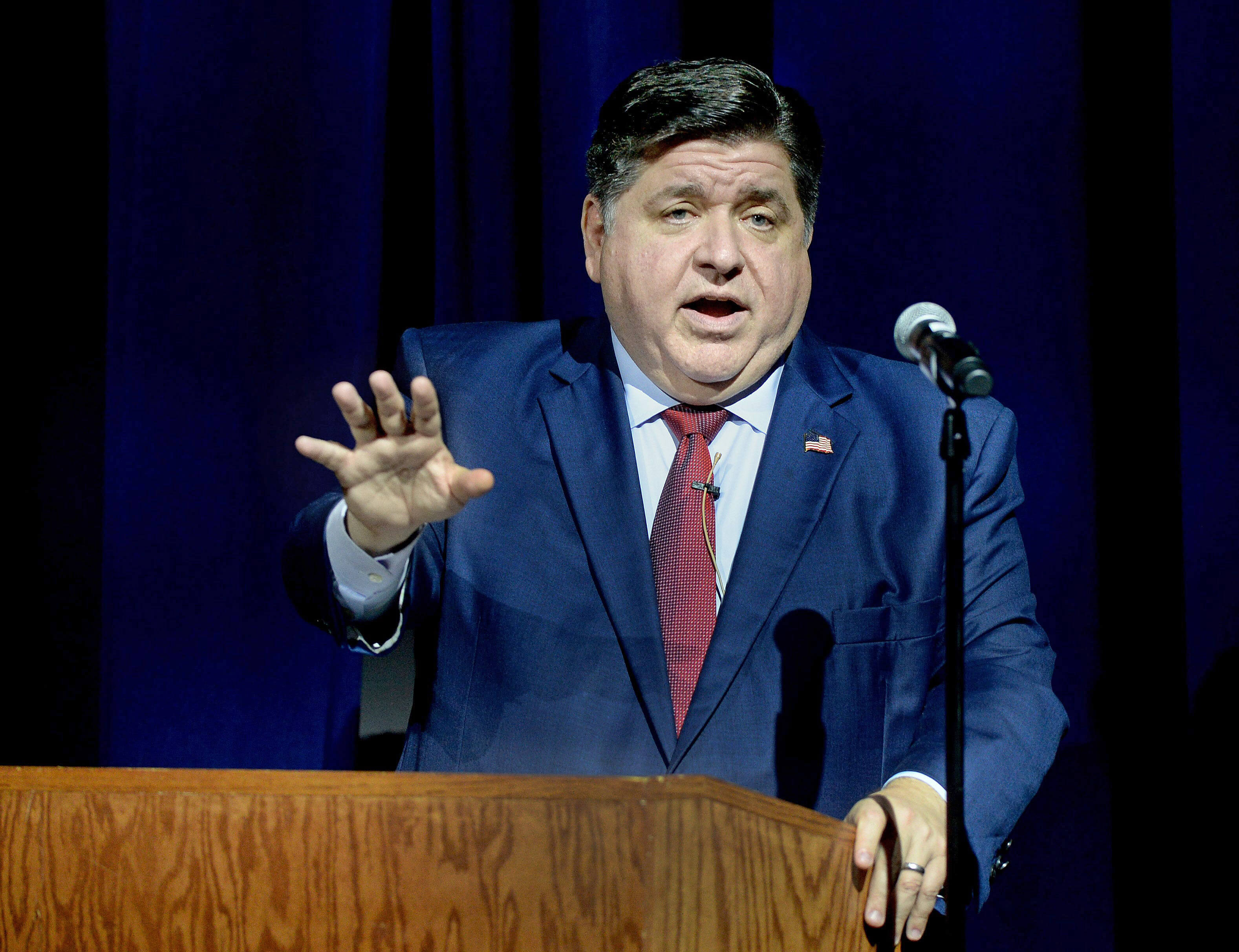
Illinois Governor JB Pritzker has signed SB 3019 into law, making Illinois the second U.S. state to impose a dedicated tax on prediction market wagers, following Kentucky’s move earlier in 2025. The new law takes effect July 1, 2025, and applies tiered rates of 1.75% and 3.5% to exchange-based sports event wagers. The Commodity Futures Trading Commission has responded by suing Illinois, arguing that federal law under the Commodity Exchange Act grants the CFTC exclusive regulatory authority over these markets, setting up one of the most consequential jurisdictional battles in U.S. financial regulation this year.
Illinois SB 3019: What the New Prediction Market Tax Law Actually Does
The Tax Structure and Effective Date
SB 3019, signed by Governor JB Pritzker as part of Illinois’s broader fiscal year 2026 budget package, introduces a two-tier tax on exchange wagers placed on sporting events through prediction market platforms. Starting July 1, 2025, operators will pay 1.75% on the first $5 million in qualifying wagers and 3.5% on all wager volume above that threshold [1]. The tiered structure mirrors the approach used in traditional sports betting tax frameworks, but applies it to a category of financial instrument that federal regulators classify as event contracts under the Commodity Exchange Act.
The law targets what Illinois legislators describe as a regulatory gap: prediction market platforms operating in the state without contributing tax revenue the way licensed sportsbooks do. Illinois already operates one of the largest legal sports betting markets in the United States, generating over $200 million in tax revenue in fiscal year 2024 according to the Illinois Gaming Board. State legislators argued that prediction market operators were capturing similar consumer activity while avoiding comparable fiscal obligations.
The practical effect is that platforms like Kalshi, Polymarket, and Crypto.com’s prediction market products face a new cost layer on Illinois-based volume, which operators will likely pass on to users through wider spreads or reduced payouts. This is not a user-facing excise tax; it is levied on the operator, but market dynamics typically shift the burden downstream.
What Prediction Markets Are and Why States Want to Tax Them
Prediction markets are platforms where participants buy and sell contracts tied to the outcome of real-world events, including elections, economic indicators, and sporting contests. Prices on these contracts reflect the crowd’s collective probability estimate for each outcome. Kalshi, which received CFTC designation as a Designated Contract Market in 2023, operates the largest regulated prediction market in the United States. Polymarket, which runs on the Polygon blockchain, is the largest globally by volume, having processed over $3.5 billion in contracts during the 2024 U.S. presidential election cycle alone [2].
States see prediction markets as a revenue opportunity precisely because the sector has grown rapidly. The global prediction market industry was valued at approximately $73 billion in 2023 and is projected to exceed $120 billion by 2028, according to market research firm Grand View Research. That growth has drawn state legislators who see parallels to the post-PASPA sports betting expansion, where states moved quickly to capture tax revenue from a newly legalized activity.
The critical legal distinction is that prediction markets operating as CFTC-regulated event contracts are not sports betting under federal law. That distinction is the foundation of the CFTC’s lawsuit against Illinois.
CFTC Sues Illinois: The Federal Jurisdiction Argument Explained
Why the CFTC Claims Exclusive Authority
The Commodity Futures Trading Commission filed suit against the state of Illinois after Illinois regulators issued cease-and-desist orders to prediction market operators, directing them to stop accepting wagers from Illinois residents without state authorization. The CFTC’s core legal argument is that the Commodity Exchange Act, the federal statute that governs futures and derivatives markets, preempts state regulation of CFTC-designated contract markets [1]. Under the Supremacy Clause of the U.S. Constitution, federal law supersedes conflicting state law, and the CFTC contends that Illinois’s cease-and-desist orders and the new tax regime constitute exactly that kind of conflict.
CFTC Chair Rostin Behnam has publicly stated that the agency views its jurisdiction over event contracts as exclusive and non-delegable to state authorities. The CFTC approved Kalshi’s sports event contracts in September 2024 after a federal court ruled in Kalshi’s favor following the agency’s own initial attempt to block those contracts. That ruling, issued by the U.S. District Court for the District of Columbia, found that the CFTC had not demonstrated that sports event contracts were contrary to the public interest under the Commodity Exchange Act. Illinois’s subsequent attempt to regulate those same contracts at the state level directly challenges that federal framework.
The CFTC’s lawsuit against Illinois is not merely about tax policy; it is about whether any state can impose licensing, taxation, or operational restrictions on federally designated contract markets. If Illinois prevails, it would open the door for all 50 states to layer their own regulatory requirements on top of federal oversight, fragmenting the national market for prediction contracts.
The Kentucky Precedent and the Operator Lawsuits
Kentucky moved first, becoming the initial state to tax prediction markets with a 14.25% rate on gross operator revenue. That rate is dramatically higher than Illinois’s structure and prompted an immediate legal response. Kalshi, Crypto.com, and Polymarket filed suit against Kentucky in federal court, arguing that the state’s tax and associated regulatory requirements violate the Commodity Exchange Act’s preemption provisions and constitute an unconstitutional burden on federally regulated commerce [1].
The Kentucky litigation is proceeding in parallel with the Illinois CFTC action, creating two simultaneous federal court tracks that will likely produce conflicting or complementary rulings on the same underlying legal question. Legal analysts at law firm Debevoise and Plimpton have noted that the outcome of these cases will define the regulatory architecture for prediction markets for the next decade. A ruling in favor of the states would effectively create a patchwork of 50 different regulatory regimes for what are currently treated as national financial instruments.
New Jersey has introduced its own prediction markets tax legislation, signaling that other states are watching the Kentucky and Illinois cases closely and preparing to move regardless of the litigation outcomes. The New Jersey proposal has not yet advanced to a floor vote as of mid-2025, but its introduction confirms that state-level taxation of prediction markets is becoming a legislative trend rather than an isolated experiment.
State-by-State Prediction Market Regulation: 2025 Comparison
| State | Action Taken | Tax Rate | Legal Status |
|---|---|---|---|
| Kentucky | Prediction market tax enacted | 14.25% on gross revenue | Sued by Kalshi, Polymarket, Crypto.com |
| Illinois | SB 3019 signed by Gov. JB Pritzker | 1.75% (first $5M); 3.5% above | CFTC lawsuit filed; effective July 1, 2025 |
| New Jersey | Tax legislation introduced | Rate not yet finalized | Pending legislative vote |
| Federal (CFTC) | Suing Illinois; approved Kalshi contracts | No federal tax on event contracts | Active litigation in federal courts |
The regulatory divergence between states is already creating operational complexity for prediction market platforms. Kalshi, which holds a CFTC Designated Contract Market license, must now evaluate whether to geo-restrict Illinois users, absorb the new tax cost, or challenge the law in court as it has done in Kentucky. Polymarket, which operates on the Polygon blockchain and is not currently licensed by the CFTC for U.S. retail access, faces a different set of constraints but is equally affected by the precedent these state actions establish [2].
The speed of state legislative action in 2025 reflects a broader pattern seen after the Supreme Court’s 2018 Murphy v. NCAA decision, which struck down the federal ban on sports betting and triggered a wave of state-level sports betting laws. Prediction market operators and their legal teams are acutely aware of that precedent and are working to prevent a similar fragmentation from taking hold before federal courts can establish clear preemption boundaries.
What Illinois’s Prediction Market Tax Means for Crypto and Blockchain Finance
Blockchain-Native Prediction Markets Face Compounding Regulatory Risk
The Illinois and Kentucky tax actions carry direct implications for blockchain-based prediction market protocols. Polymarket, built on the Polygon proof-of-stake blockchain, processed more than $3.5 billion in contract volume during the 2024 election season and operates as a decentralized application where smart contracts automatically settle outcomes [2]. Traditional regulatory frameworks struggle to apply operator-level taxes to decentralized protocols because there is no single legal entity collecting wagers in the conventional sense.
However, state regulators have shown willingness to target the fiat on-ramps and off-ramps that connect blockchain platforms to U.S. users, including payment processors, stablecoin issuers, and centralized exchange partners. If states successfully establish the right to tax prediction market activity, blockchain-native platforms could face pressure through their banking and payment infrastructure rather than through direct operator licensing. This is the same enforcement vector states have used against offshore sports betting operators for years.
For crypto investors and DeFi participants, the Illinois SB 3019 development signals that state-level regulatory fragmentation is not limited to centralized finance. Protocols like Augur, which pioneered decentralized prediction markets on Ethereum starting in 2018, and newer platforms building on Arbitrum and Base face a regulatory environment where their legal status could vary by state even if federal regulators take a permissive stance. Readers tracking the broader crypto regulatory environment in 2025 should treat the prediction market tax debate as a leading indicator of how states will approach DeFi taxation more broadly.
Stablecoin and Payment Rail Exposure
Prediction market platforms that settle in USDC or USDT rely on Circle and Tether’s infrastructure to convert winnings into fiat currency for U.S. users. If state tax obligations attach to the operator, platforms settling in stablecoins may argue that no taxable wager in the traditional sense occurs on their systems. That argument has not been tested in court, and the Illinois and Kentucky litigation will likely produce the first judicial guidance on whether blockchain settlement mechanics affect state tax liability.
Crypto exchanges that offer prediction market products, including Crypto.com, which is a named plaintiff in the Kentucky lawsuit, face the most immediate compliance burden. Crypto.com operates a centralized platform with identifiable U.S. users, making it straightforward for state tax authorities to assert jurisdiction. The company’s decision to join Kalshi and Polymarket in suing Kentucky reflects the industry’s unified position that state taxation of CFTC-regulated products is legally impermissible. Readers interested in how exchange-level regulation affects token markets can explore our analysis of CFTC oversight of crypto derivatives for additional context.
Key Takeaways
- Illinois Governor JB Pritzker signed SB 3019 into law, imposing a 1.75% tax on the first $5 million in prediction market wagers and 3.5% on volume above that threshold, effective July 1, 2025.
- Illinois is the second U.S. state to tax prediction markets, following Kentucky, which enacted a 14.25% rate on gross operator revenue earlier in 2025.
- The Commodity Futures Trading Commission filed suit against Illinois, arguing the Commodity Exchange Act grants the CFTC exclusive jurisdiction over CFTC-designated event contract markets.
- Kalshi, Polymarket, and Crypto.com are suing Kentucky over its 14.25% prediction market tax, creating parallel federal litigation tracks on the same preemption question.
- New Jersey has introduced its own prediction market tax legislation, indicating a growing state-level trend that could affect operators across the country.
- Polymarket processed over $3.5 billion in contract volume during the 2024 U.S. presidential election, illustrating the scale of the industry now under regulatory scrutiny.
- Blockchain-native prediction market protocols face indirect regulatory exposure through payment rails and stablecoin infrastructure even if direct operator taxation proves legally unenforceable.
Frequently Asked Questions
What is the Illinois prediction market tax rate under SB 3019?
Illinois SB 3019 imposes a tiered tax on exchange wagers on sporting events: 1.75% on the first $5 million in wagers and 3.5% on all volume above that amount. The tax applies to operators, not individual users, and takes effect July 1, 2025 [1].
Why is the CFTC suing Illinois over prediction markets?
The Commodity Futures Trading Commission argues that the Commodity Exchange Act grants the CFTC exclusive jurisdiction over federally designated event contract markets. Illinois issued cease-and-desist orders to prediction market operators and enacted SB 3019, which the CFTC contends conflicts with federal law and is therefore preempted under the Supremacy Clause of the U.S. Constitution [1].
Which states have taxed prediction markets in 2025?
Kentucky was the first state to tax prediction markets, imposing a 14.25% rate on gross operator revenue. Illinois became the second state with SB 3019, signed by Governor JB Pritzker. New Jersey has introduced similar legislation but has not yet passed it as of mid-2025 [1].
Are blockchain prediction markets like Polymarket affected by state taxes?
Polymarket and other blockchain-native prediction market protocols face indirect regulatory exposure even if direct operator taxation is legally contested. States can target fiat on-ramps, payment processors, and stablecoin infrastructure used by these platforms to enforce compliance obligations on U.S. users. The Illinois and Kentucky litigation will likely produce the first judicial guidance on this question [2].
The Bottom Line
The Illinois SB 3019 signing and the CFTC’s subsequent lawsuit represent the sharpest federal-state regulatory conflict in the prediction markets sector to date. Governor JB Pritzker’s decision to include the prediction market tax in the state’s fiscal year 2026 budget signals that Illinois views these platforms as a durable revenue source, regardless of the legal uncertainty. The CFTC’s willingness to sue a state government, rather than simply issue guidance, signals equal conviction on the federal side that this jurisdictional question must be resolved in court rather than through negotiation.
The parallel Kentucky litigation, with Kalshi, Polymarket, and Crypto.com as named plaintiffs, means federal courts will have multiple opportunities to rule on Commodity Exchange Act preemption before any state tax actually generates significant revenue. The outcome will determine whether prediction markets develop under a single national regulatory framework or fracture into a state-by-state patchwork similar to the current sports betting environment. For crypto and blockchain finance participants, the stakes extend well beyond prediction markets: the legal theories being tested here will shape how states approach DeFi protocols, tokenized event contracts, and blockchain-based derivatives for years to come. Readers tracking these developments can follow our ongoing coverage of U.S. crypto regulation updates and CFTC enforcement actions in digital assets.
The prediction market tax battle is, at its core, a fight over who controls the future of event-driven financial markets in America. The answer will come from federal courts, and the timeline is 2025.
Stay Ahead of Prediction Market and Crypto Regulation
Read the Latest Regulatory Coverage
18+ | Play Responsibly | T&Cs Apply
Sources
- Covers.com – Reporting on Illinois SB 3019, Kentucky prediction market tax, CFTC lawsuit, and New Jersey legislative developments
- Polymarket – Platform volume data cited for 2024 U.S. presidential election contract activity exceeding $3.5 billion
- Grand View Research – Global prediction market industry valuation and growth projections through 2028
